


The Accommodation Gap: Disability Testing in Greater Cincinnati Housing

Updated: Jun 2
Access to safe, stable places to live influences many other outcomes for people and communities. Housing and communities provide people with access to jobs, childcare and schools, and food— setting the stage for financial security, physical and mental health, and overall quality of life.
At HOME, we are dedicated to creating inclusive communities in Southwest Ohio. We advocate for fair and affordable housing in all neighborhoods, ensuring that everyone has access to a place they can call home. Our work is driven by the belief that equitable housing opportunities are key to advancing communities that work for everyone.
What is Fair Housing?
The Fair Housing Act prohibits housing discrimination based on someone’s race, color, religion, national origin, sex, family status, or disability. All types of housing are protected under the Fair Housing Act, including rentals, single-family homes, assisted living facilities, homeless shelters, student housing, and more.
The Fair Housing Act was amended in 1988 to include disability protections. This prohibits discrimination in all housing transactions based on any physical or mental disability, history of a disability, or perceived disability. It also protects those associated with a person with a disability (like a family member).
The Americans with Disabilities Act (ADA) prohibits discrimination on the basis of disability in public accommodations and government-subsidized housing and housing programs. There are broader protections for people with disabilities under the ADA, but it only covers housing and housing programs that have government funding.
Reasonable Accommodations & Modifications

Reasonable Accommodations are changes in rules, policies, practices, or services.
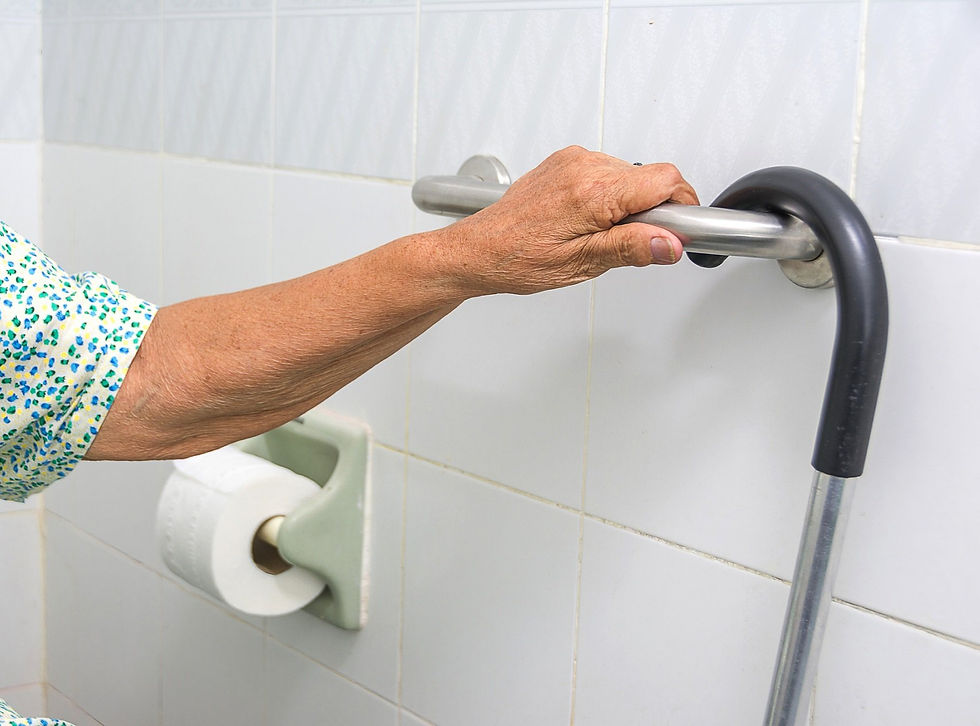
Reasonable Modifications are structural changes to a housing unit.
A person with a disability may request a reasonable accommodation or modification for:
Mobility/physical accessibility
Ramps, wider doorways, grab bars, roll-in showers, lowered countertops, stairlifts, accessible light switches
Policy exceptions
Parking, guess policies, or rent due date tied to disability-related needs.
Communication accessibility
Documents in large print, Braille, or other alternative formats; interpreter arrangements for meetings.
Entrance/access changes:
Reserved/closer parking, curb cuts, keyless/ automatic doors, ground floor unit assignment.
Equal enjoyment/ access to common areas and amenities:
Accessible laundry, pool, gym, or community rooms.
Visual/hearing needs:
Visual doorbells/alarms, flashing smoke detectors, captioning for community announcements.
Assistance animals:
Waiving “no pets” rules or pet fees for assistance or service animals.
Live-in aide or additional occupants:
Permission for a caregiver to reside or stay overnight.
A person with a disability must request accommodations or modifications from a housing provider at any time, either orally or in writing.
Fair Housing Investigations
Among HOME's fair housing counseling, investigation, and enforcement services, HOME conducts fair housing investigations through testing.
Fair housing testing is a U.S. Supreme Court-recognized method of investigating housing discrimination and determining how the real estate market treats consumers. HOME conducts fair housing tests using individuals who have been trained on testing procedures to remain impartial in an effort to ensure that accurate information is gathered.
Investigation Process
A test often includes one individual who represents themselves as being a member of a class of people protected from discrimination. This may be referred to as the 'protected tester'. That individual is often matched with a person who represents themselves as having similar characteristics to the protected tester, except that this tester does not represent themselves as being a member of a protected class. This may be referred to as a ‘control tester'. Neither tester knows if they are the protected or control tester.
In testing for disability discrimination, for example, tests can include one individual who represents themselves as having a disability and presents a request for a reasonable accommodation or modification.
Testers are not told the reason for the test or the test outcome. Testers are trained to follow instructions in a test assignment when contacting a housing provider. Then, testers report on their interaction and document what happened.
Once a test is complete, a test coordinator reviews the information that was or was not shared with each tester, including the availability of housing units, tenant qualifications, lease terms, amount of security deposits and rent, any specials or offers, and any other comments. Then, HOME staff analyzes what occurred.
Tests where no differential treatment can be proven through testing alone are labeled as “does not support allegations”.
If a test showed differences in treatment, but it was unclear if those differences were tied to protected class status, those tests are labeled “inconclusive”.
Tests where differences that disadvantage the tester in the protected class, such as not being offered the same specials, not being told about amenities, or being discouraged from applying, are labeled “supports allegations”.
Disability Investigations
HOME conducts tests in response to a complaint as well as to understand the housing market in general. A majority of HOME’s complaints that are investigated are related to disability discrimination, and 82% of HOME’s fair housing intakes alleging disability discrimination since January 2025. This is consistent with trends in Ohio and national reporting of disability as the highest number of discrimination complaints.
Based on these trends of fair housing intakes, HOME focuses on testing for evidence of disability discrimination.
Type | Intakes | % |
Disability | 437 | 82% |
Race/Color | 44 | 8% |
Sex | 28 | 5% |
Familial status | 16 | 3% |
National origin | 10 | 2% |
Religion | 1 | 0% |
Total | 536 |
Investigation Results
HOME conducted 62 total tests in rental housing for disability discrimination between January 2025 and March 2026. Nearly half of those investigations showed evidence of disability discrimination.
Does not support allegations
8 Tests (13%)
Inconclusive
25 Tests (40%)
Supports allegations
29 Tests (47%)
Investigations finding evidence of disability discrimination are most commonly related to failure to permit reasonable accommodations. Housing providers consistently refused to make accommodations for designated parking spaces for testers with mobility impairments and accommodations to move rent payment dates to accommodate Social Security Disability (SSDI) payments.
Disability Payment Date
HOME conducted a series of tests in which a tester with a disability receives a Social Security Disability Income (SSDI) check either on the 10th of the month or the 15th of the month. The tester asked a rental housing provider if they could pay rent on the 10th or the 15th, instead of the 1st of the month when rent is normally due.
Housing providers commonly responded with:

"A $100 charge for paying late."
"An eviction fee because 3 days after a late notice, an eviction fee is assessed."
"Any rent paid after the 6th is considered late, and it would incur a 5% charge."
"We have to find out from someone else because it's the first time we've been asked."
"There's no option to waive the late fees, and that, due to the FHA regulations, we cannot make individual exceptions that do not apply to everyone."
"You could pay early in the month to be ahead of the next month."
There are many fair housing case settlements and court decisions that have determined a housing provider must modify a disabled tenant’s rent payment date without fees as a reasonable accommodation when it is necessary for a recipient of SSDI to fully live and enjoy their housing.
Designated Parking Spaces
HOME conducted a series of tests in which a tester with a physical disability with impaired mobility asked a housing provider for a designated parking space close to the entrance or the available unit.
Housing providers responded in the following ways:
"There are already handicap parking spaces available, and the spaces rarely get filled up."
"The garage owner said that if parking becomes an issue, then the garage owner will assign a spot."
"We don’t assign spots due to fair housing laws because if we assign a specific spot for one person, we have to assign spots for everyone."
"We don't do reservations for the handicapped parking spots or regular parking spots."
In fair housing case law, there is unequivocal support for requiring housing providers to provide a designated parking space to a person with a disability when requesting a reasonable accommodation. Courts have placed the responsibility for providing the parking space on the housing provider, even if the provision of an accessible or assigned parking space results in some cost or inconvenience to the housing provider. This holds true in cases where the housing provider has a policy of not assigning parking spaces or if there are already several handicapped parking spaces.
HUD and DOJ have stated clearly in the Joint Statements for RAs/RMs that a housing provider must provide a resident with a mobility impairment an assigned, accessible parking space close to the entrance to their unit.
Housing providers may not charge the tenant fees or costs for a designated parking space. In fact, case law suggests that housing providers have to bear the cost of the signage, repainting, redistributing spaces, or creating curb cuts in order to create an accessible or designated parking space.

Conclusion
HOME’s investigations find a significant amount of disability discrimination in the greater Cincinnati rental market. The findings from HOME’s testing show that many housing providers do not understand Reasonable Accommodations as part of Fair Housing laws.
The argument that housing providers cannot provide these accommodations because of fair housing laws requiring them to treat everyone the same is not valid. Specifically for people with disabilities, housing providers must consider reasonable accommodations and modifications as exceptions to their practices overall.
“Since rules, policies, practices, and services may have a different effect on persons with disabilities than on other persons, treating persons with disabilities exactly the same as others will sometimes deny them an equal opportunity to use and enjoy a dwelling.”
The widespread evidence that HOME finds in investigations around reasonable accommodations shows that people with disabilities face the highest rates of discrimination in the greater Cincinnati area.
HOME recommends the following actions to address these high rates of discrimination:

Education
More housing providers need to understand fair housing laws that permit reasonable accommodations.

Investigation
HOME will continue to investigate and conduct tests in the rental market. More resources are needed to continue testing activities.

Enforcement
When there is evidence of discrimination, HOME can file complaints with administrative agencies of HUD and the Ohio Civil Rights Commission or can file cases in court. More resources are needed to continue enforcement activities to address these instances of discrimination.
Fair housing laws are intended to provide protections for people with disabilities to live in a home that suits their needs and allow them the best opportunity to live fully. When there is safe, stable, and accessible housing, individuals can thrive and access greater opportunities to realize their full potential.


Comments